
Chemical synthesis
Artificial execution of chemical reactions to obtain products.
Chemical synthesis is the deliberate creation of one or more products by carrying out chemical reactions through physical and chemical steps. In modern labs, this process is consistent and dependable. It typically starts with one or more compounds, called reagents or reactants, which undergo a transformation under specific conditions. Different reaction types can be used to produce a desired product, and many reactions require a work-up or purification step to isolate the final substance. The amount produced is called the reaction yield, often measured in grams in a lab or as a percentage of the theoretical maximum based on the limiting reagent. Unwanted side reactions can lower this yield. The term "synthesis" was first applied to chemistry by Hermann Kolbe.
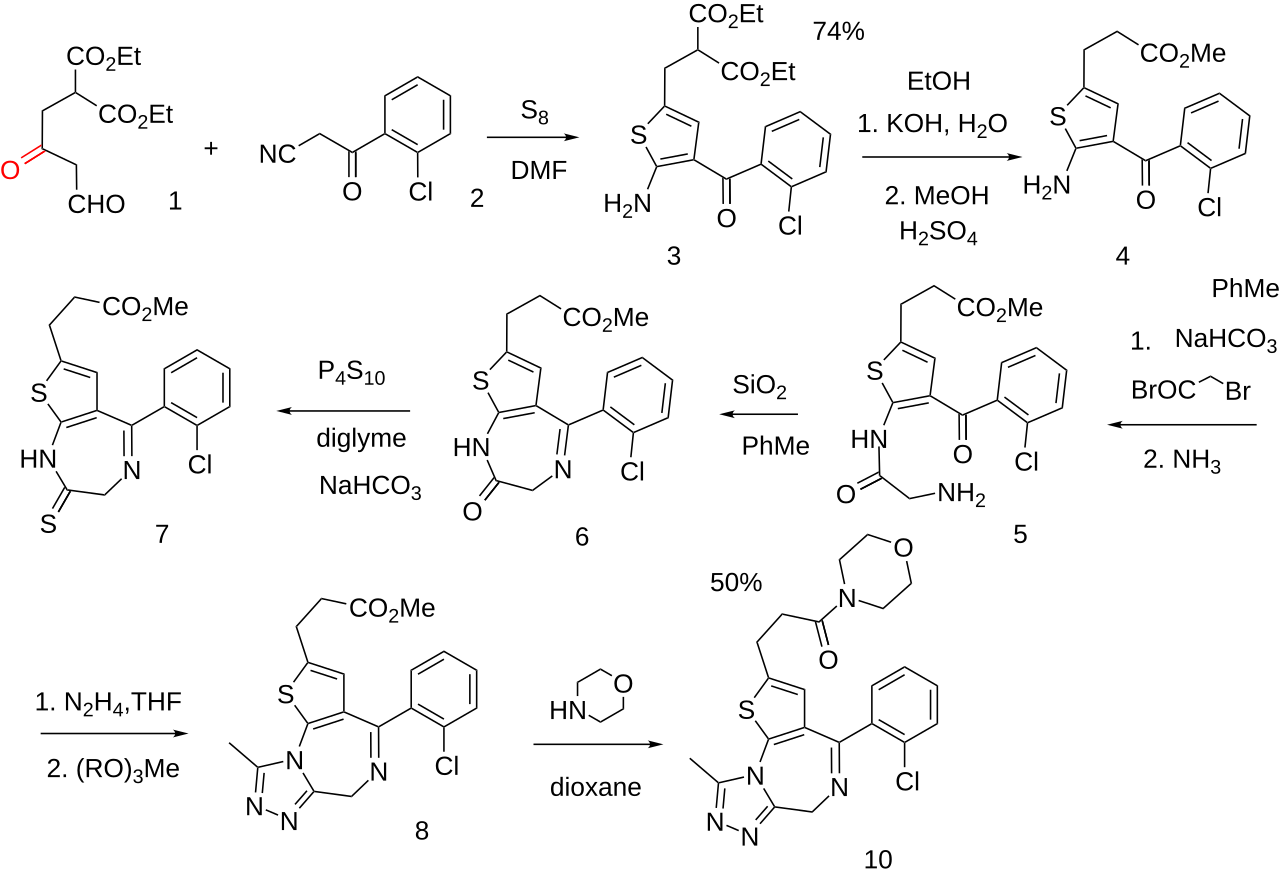
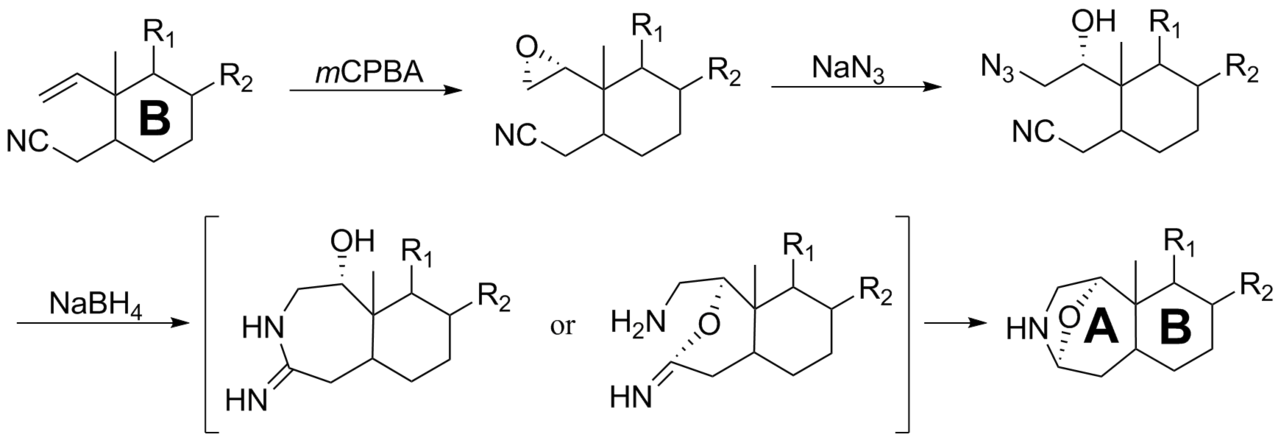
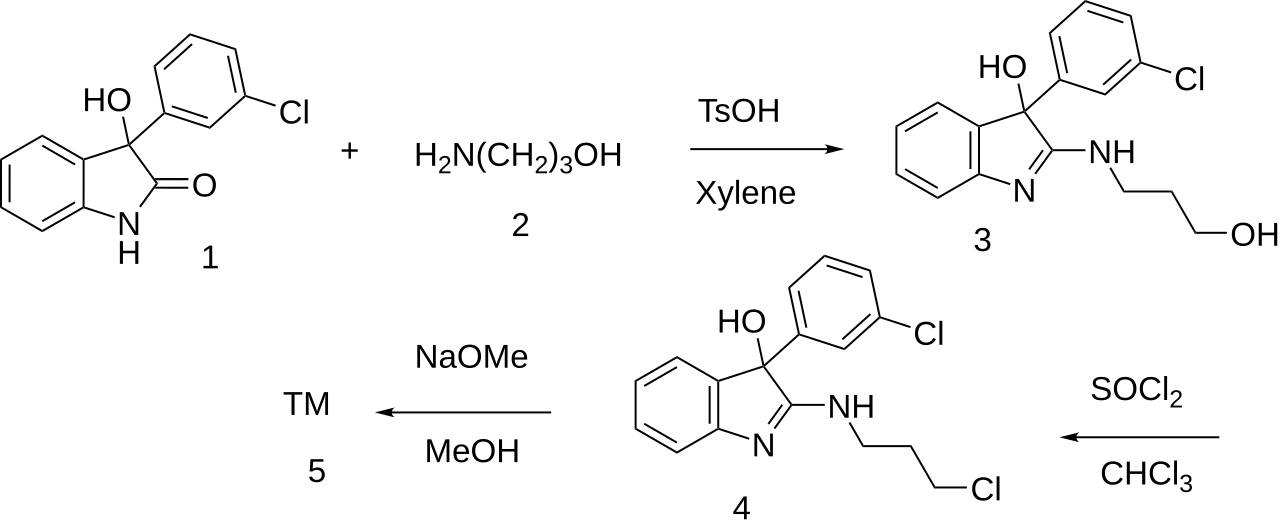
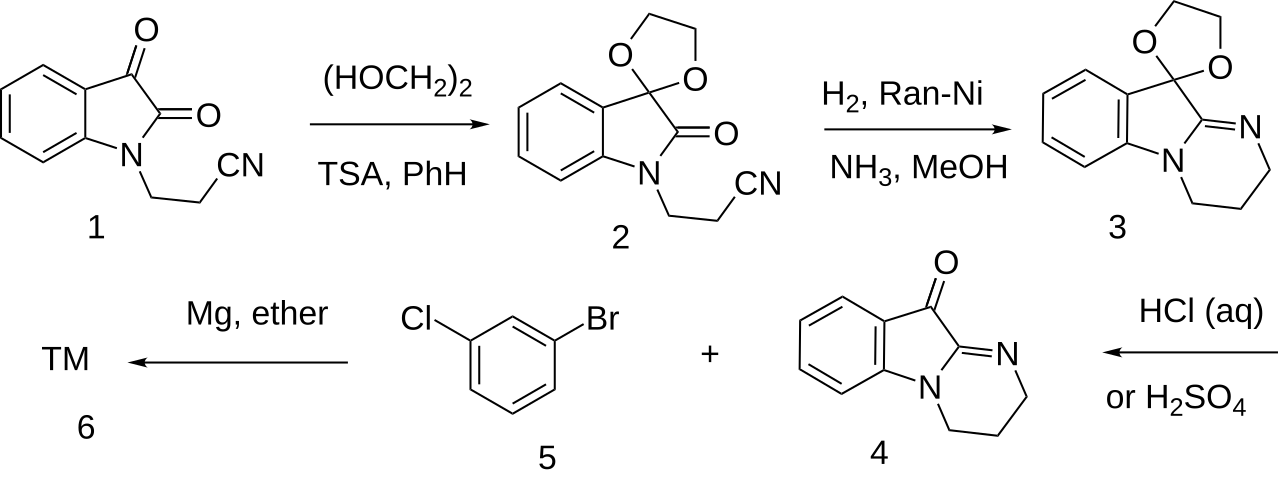
Strategies in chemical synthesis go beyond simple conversions of reactant A to product B. Multistep synthesis uses a series of sequential reactions, each needing its own work-up to isolate intermediates, such as the three separate reactions required to make paracetamol. Divergent synthesis starts from a common intermediate that branches into multiple final products. Convergent synthesis combines several independently made intermediates into a complex final product. One-pot synthesis runs multiple reactions in the same vessel without isolating intermediates, saving time and materials. Cascade reactions, a subtype of one-pot synthesis, allow consecutive transformations within a single reactant, further reducing resource use.
Catalysts speed up reactions and enable specific transformations. Photoredox catalysis controls reaction conditions by regulating small molecule activation and metal catalyst oxidation states. Biocatalysis uses enzymes as catalysts for high specificity under mild conditions. Chemoselectivity ensures only one functional group reacts while others stay untouched. Protecting groups temporarily mask reactive sites for selective reactions. Kinetic control favors fast-forming products, often less stable, while thermodynamic control favors the most stable products.
Retrosynthetic analysis plans complex syntheses by breaking a target molecule into simpler precursors. Flow chemistry pumps reactants through a reactor for precise control and scalability, used in large-scale production of drugs like Tamoxifen.
Organic synthesis focuses on organic compounds. Total synthesis of a complex product may require many sequential procedures and considerable time. Purely synthetic synthesis starts with basic lab compounds, while semisynthesis begins with natural products from plants or animals and modifies them. Inorganic and organometallic synthesis produce compounds with significant non-organic content, such as the anti-cancer drug cisplatin from potassium tetrachloroplatinate.
Green chemistry designs new synthetic methods and apparatus to simplify operations and uses environmentally benign solvents. Key principles include atom economy, which aims to incorporate all reactant atoms into the final product, and reducing waste and inefficiencies. These innovations lower environmental and health impacts.
Chemical synthesis has wide applications. Catalysis development is vital for petroleum refining, petrochemical production, and pollution control. In medicine, organic synthesis helps discover and optimize new drugs, while metal complexes are synthesized for medical imaging and cancer treatments. For biopharmaceuticals, chemical synthesis produces and modifies organic and biologically sourced compounds, including monoclonal antibodies and other biologics, using techniques like DNA recombinant technology and cell fusion to tailor treatments for specific diseases.
- field
- Chemistry
- known_for
- Artificial execution of chemical reactions to obtain products; first use of the word 'synthesis' in a chemical context by Hermann Kolbe
- key_concepts
- Reagents, reactants, reaction yield, side reaction, multistep synthesis, one-pot synthesis, cascade reactions, catalysts, retrosynthetic analysis, flow chemistry
Lore & Background
Chemical synthesis involves one or more compounds (known as reagents or reactants) that will experience a transformation under certain conditions. Various reaction types can be applied to formulate a desired product, and many reactions require some form of processing ('work-up') or purification procedure to isolate the final product. The amount produced by chemical synthesis is known as the reaction yield, typically expressed as a mass in grams or as a percentage of the total theoretical quantity based on the limiting reagent. A side reaction is an unwanted chemical reaction that can reduce the desired yield.
Reader's Guide
Chemical synthesis employs various strategies to achieve efficient and precise molecular transformations. These include reaction sequences such as multistep synthesis, divergent synthesis, convergent synthesis, one-pot synthesis, and cascade reactions. Catalytic strategies like photoredox catalysis and biocatalysis accelerate reactions and enable specific transformations. Reactivity control is managed through chemoselectivity, protecting groups, and kinetic versus thermodynamic control. Advanced planning techniques include retrosynthetic analysis and flow chemistry. Organic synthesis deals with organic compounds, while inorganic and organometallic synthesis prepare compounds with significant non-organic content. Green chemistry promotes environmentally benign solvents, atom economy, and waste reduction. Applications span catalysis, medicine, and biopharmaceuticals, including drug discovery, metal complexes for imaging and cancer treatments, and production of monoclonal antibodies.
Did You Know?
- The word synthesis was used first in a chemical context by the chemist Hermann Kolbe.
- A side reaction is an unwanted chemical reaction that can reduce the desired yield.
- One-pot synthesis involves multiple reactions in the same vessel, allowing sequential transformations without intermediate isolation.
- Flow chemistry has been employed in the large-scale production of pharmaceuticals such as Tamoxifen.
The Death of Vitalism
Before the 18th century, chemists held that substances derived from living things carried a mysterious vital force that set them apart from inorganic matter. This doctrine, known as vitalism, persisted for centuries and shaped how scientists approached the natural world. Michel Chevreul began chipping away at it around 1816 when he studied soaps made from fats and alkalis, isolating the individual acids and demonstrating that chemical transformation could occur in traditionally organic materials without any biological agency. The decisive blow came in 1828, when Friedrich Wöhler synthesized urea—a compound found in urine—using only inorganic salts, potassium cyanate and ammonium sulfate. Though Wöhler himself was cautious about claiming to have overturned vitalism, the feat marked the first time a substance presumed to be exclusively organic was created in a laboratory from non-biological starting materials. The scientific community has since broadly accepted this as the moment the vital-force doctrine fell. In the years that followed, Justus von Liebig took up the task of organizing the field into a coherent discipline, earning recognition as one of its principal architects.
The Carbon Lattice and the Structural Revolution
In 1858, two researchers working independently—Friedrich August Kekulé and Archibald Scott Couper—arrived at the same transformative insight: carbon atoms, with their capacity for four bonds, could link to one another to form extended lattices. They further proposed that the precise patterns of atomic bonding within a molecule could be deduced through careful interpretation of chemical reactions. This concept of chemical structure became the cornerstone upon which the entire discipline was rebuilt. Carbon's valence of four, combined with its ability to form single, double, and triple bonds as well as structures with delocalized electrons, generates an almost limitless array of molecular architectures. The resulting compounds span hydrocarbons built solely from carbon and hydrogen, to molecules incorporating oxygen, nitrogen, sulfur, phosphorus, and halogens, to organometallic species featuring carbon-metal bonds. This structural diversity underpins the fact that organic compounds constitute the majority of all known chemicals and form the molecular basis of every known form of life. The field naturally overlaps with organometallic chemistry, biochemistry, medicinal chemistry, polymer chemistry, and materials science, reflecting the breadth of carbon's chemical vocabulary.
From Serendipity to the Pharmaceutical Age
In 1856, a young chemist named William Henry Perkin was attempting to synthesize quinine when he instead produced a striking purple dye that would become known as Perkin's mauve. The compound's commercial success, driven by its financial appeal to the textile trade, ignited widespread public and scientific interest in organic chemistry and demonstrated that laboratory discoveries could translate directly into profitable industry. A few decades later, the German firm Bayer entered the scene by manufacturing acetylsalicylic acid—what the world came to call aspirin—marking the dawn of the modern pharmaceutical industry in the final decade of the 19th century. By 1910, Paul Ehrlich and his laboratory team had developed arsphenamine, marketed as Salvarsan, the first effective medicinal treatment for syphilis, thereby launching the practice of chemotherapy. Ehrlich championed the idea of magic-bullet drugs—agents designed to target a specific pathogen while sparing healthy tissue—and advocated for the systematic refinement of therapeutic agents. His group also made critical contributions to producing antiserum against diphtheria and to standardizing therapeutic serums, cementing the bridge between organic chemistry and clinical medicine.
Total Synthesis and the Petrochemical Engine
The multi-step construction of complex organic molecules, known as total synthesis, has been a driving ambition of the field since its early days. Early targets included glucose and terpineol, and cholesterol-related compounds that opened pathways to synthesizing complex human hormones and their modified derivatives. As the 20th century progressed, chemists pushed the boundary of what could be assembled in the laboratory, eventually achieving total syntheses of molecules of extraordinary complexity such as lysergic acid and vitamin B12. In parallel, the discovery of petroleum and the rise of the petrochemical industry transformed organic chemistry from a largely academic pursuit into an industrial powerhouse. Converting individual petroleum compounds into new types of molecules through various chemical processes enabled the production of a vast range of commercial products: plastics, synthetic rubber, organic adhesives, and property-modifying petroleum additives and catalysts. The synthetic production of indigo illustrates this shift vividly—plant-derived indigo output fell from 19,000 tons in 1897 to just 1,000 tons by 1914 after Adolf von Baeyer's synthetic methods took hold, and by 2002, 17,000 tons of synthetic indigo were being produced from petrochemical feedstocks.
Gallery


Frequently Asked Questions
What is Chemical synthesis?
Chemical synthesis is the deliberate, artificial driving of one or more chemical reactions to produce a desired target molecule or set of products. It involves a sequence of physical and chemical manipulations—adding reagents, controlling conditions, isolating intermediates—until the final compound is obtained.
Who first used the word 'synthesis' in a chemical context?
The German chemist Hermann Kolbe was the first to apply the term 'synthesis' specifically to chemical work, giving the field the name still in use today.
What are Chemical synthesis's key tools and concepts?
Its core toolkit includes reagents, reactants, catalysts, and the idea of reaction yield versus side reactions. More advanced strategies—retrosynthetic analysis, multistep and one-pot synthesis, cascade reactions, and flow chemistry—let chemists plan and execute complex builds efficiently.
How does Chemical synthesis's story end in a modern lab?
The process concludes with isolation and purification of one or more target products, and because modern protocols are designed to be reproducible and reliable, the same sequence can be repeated to generate the compound again and again.
Why is Chemical synthesis important to the field of Chemistry?
It is the fundamental method by which chemists create molecules that do not yet exist or that nature does not supply in useful quantities, making it the backbone of pharmaceuticals, materials science, and virtually every applied area of the discipline.
More in Chemistry Fundamentals 1-24
Spotted an error? Know more?
This is a living reference — every entry is fact-audited, and reader corrections feed straight into our audit queue. Suggest an edit · See this site's audit record