
Acetone
Simplest ketone, key solvent and industrial precursor.

Fvasconcellos · Public domain
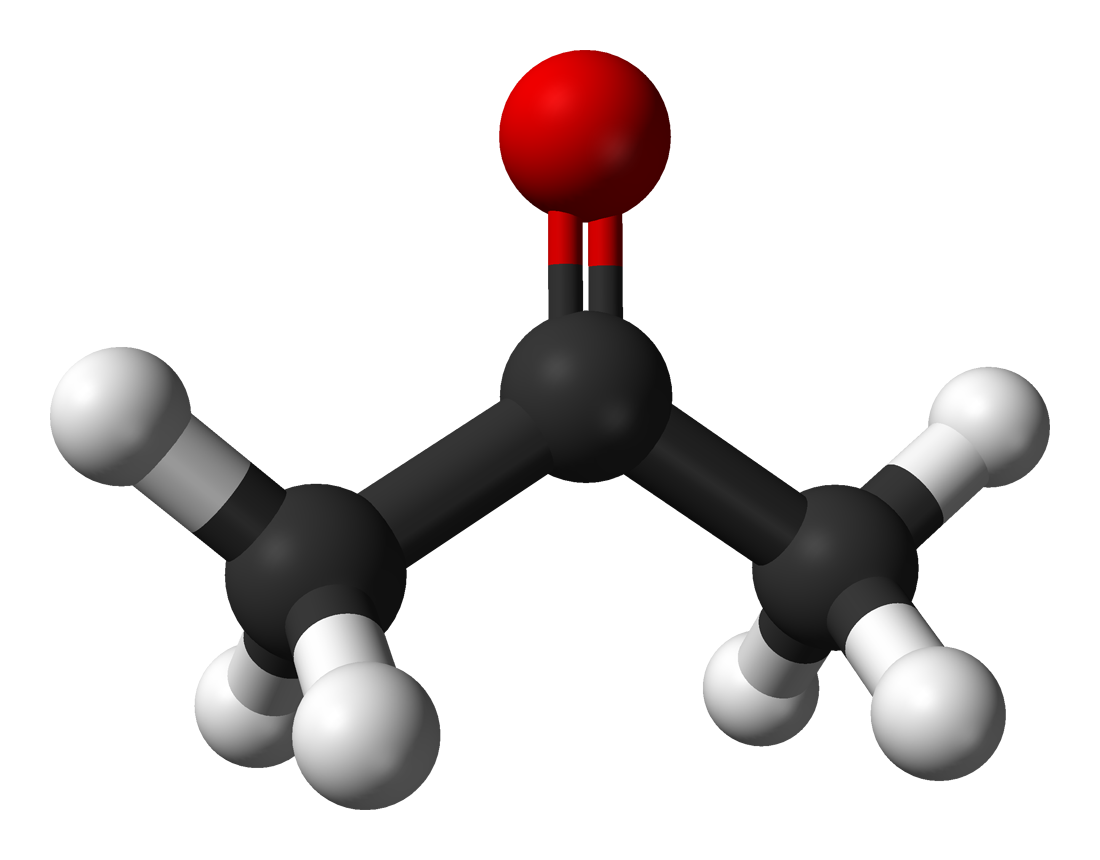
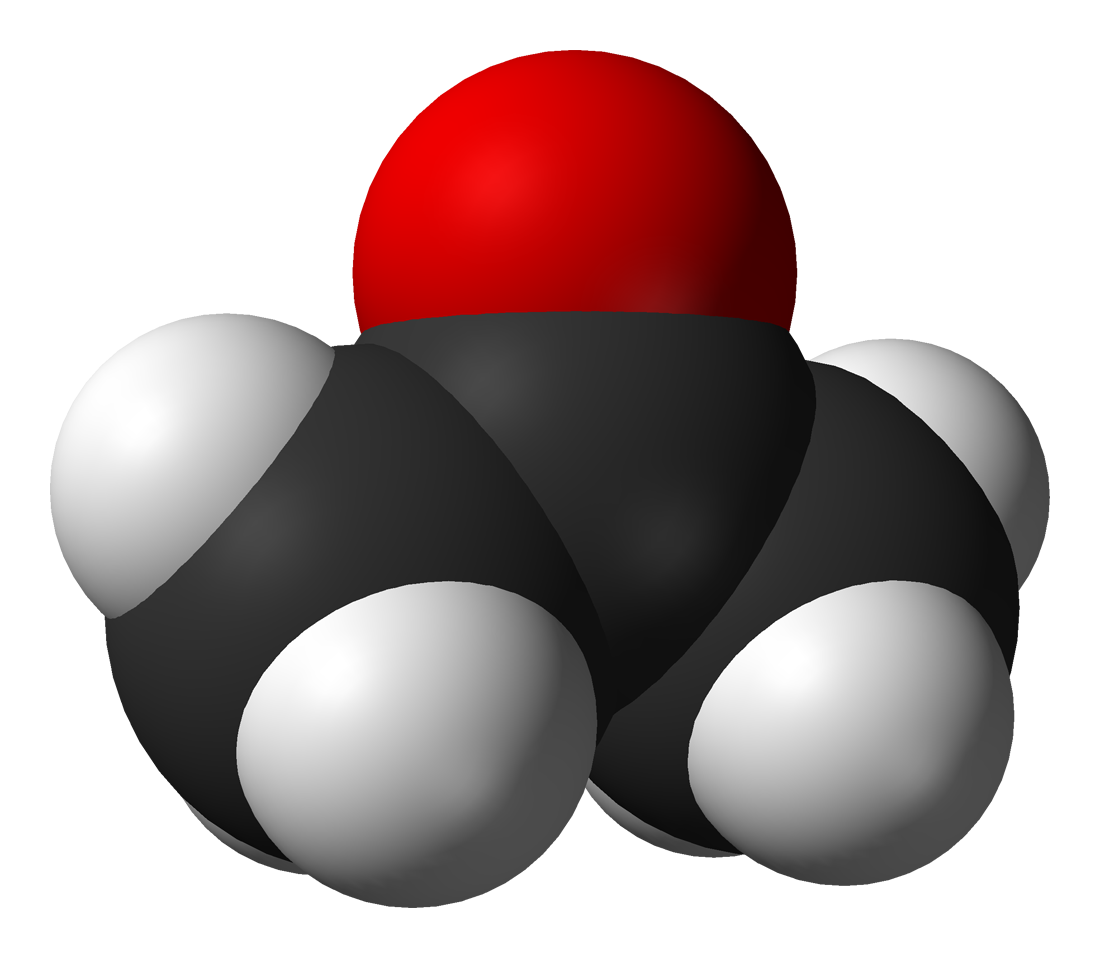
Acetone (2-propanone or dimethyl ketone) is an organic compound with the formula (CH3)2CO. It is the simplest and smallest ketone, a colorless, highly volatile, and flammable liquid with a characteristic pungent odor.
- chemical_formula
- (CH3)2CO
- type
- Simplest and smallest ketone
- appearance
- Colorless, highly volatile, flammable liquid
- odor
- Characteristic pungent odor
- miscibility
- Miscible with water
- global_production_2010
- 6.7 million tonnes
- major_uses
- Solvent, production of methyl methacrylate and bisphenol A
Lore & Background
During World War I, Chaim Weizmann developed the biochemical process for industrial production of acetone (Weizmann Process).
Reader's Guide
Acetone is produced directly or indirectly from propene, with approximately 83% via the cumene process, tying its production to phenol. It is a common building block in organic chemistry and serves as a solvent in household products such as nail polish remover and paint thinner. Acetone is produced and disposed of in the human body through normal metabolic processes; small quantities are present naturally in blood and urine, and people with diabetic ketoacidosis produce it in larger amounts. Medical ketogenic diets that increase ketone bodies in the blood are used to suppress epileptic attacks in children with treatment-resistant epilepsy. About a third of the world's acetone is used as a solvent, and a quarter is consumed as acetone cyanohydrin, a precursor to methyl methacrylate. Acetone is naturally occurring, produced by terrestrial vegetation, undefined ocean processes, incomplete combustion of biomass, or oxidation of hydrocarbons in the atmosphere.
Did You Know?
- During World War I, Chaim Weizmann developed the biochemical process for industrial production of acetone.
- Humans exhale 1.2 to 2.5 mg of acetone per day, arising from decarboxylation of acetoacetate.
- Acetone has volatile organic compound (VOC)-exempt status in the United States.
Position in the Solvent Polarity Ladder
Acetone occupies a specific rung in the hierarchy of common extractants when ranked by the Hildebrand solubility parameter. It sits just above ethyl acetate in polarity and just below ethanol, placing it in a mid-range position among the most frequently employed solvents in separation work. This ordering—ethyl acetate, then acetone, then ethanol, then methanol—reflects how readily each solvent will pull a given solute out of a competing phase. Because acetone's polarity is neither the lowest nor the highest on this list, it serves as a versatile middle-ground choice when a chemist needs to shift a compound from one phase into another without the extreme selectivity that water or methanol would impose. The 7:3 acetone-to-water blend further extends this utility, landing between pure methanol and an 8:2 ethanol-water mix, giving practitioners an additional tuning knob for fine-tuning extraction selectivity.
Function in Two-Phase Separation
In the laboratory setting, extraction relies on the equilibrium distribution of a solute between two immiscible phases, a principle rooted in partition theory. Acetone, as a recognized common extractant, participates in this dynamic by offering a distinct solubility environment that differs from the phase it is paired against. When two phases are combined in a separatory funnel, the analyte migrates from its initial solvent into the extracting solvent based on relative solubility in each medium. Acetone's intermediate polarity means it can serve as either the receiving phase for organic compounds leaving an aqueous solution or as a vehicle from which water-soluble impurities are drawn into a competing aqueous layer. The entire process is governed by how the target molecule partitions between the two media, making acetone's specific solubility character a practical consideration when selecting an extraction strategy.
The Acetone-Water Blend as a Distinct Tool
One of the more nuanced entries in the extractant polarity ranking is the 7:3 acetone-to-water mixture, which is listed as its own distinct solvent option rather than simply a diluted form of pure acetone. This blend slots into the polarity ladder between pure methanol and an 8:2 ethanol-water combination, meaning it offers a solubility environment that is measurably different from either pure acetone or pure water. For a chemist designing a separation, this intermediate position provides a tuning mechanism: the mixture can pull solutes that pure acetone might not capture efficiently, or it can leave behind impurities that a fully aqueous wash would strip away. The fact that both the neat solvent and this specific ratio appear in the standard ordering underscores that acetone's extraction utility is not a single fixed property but a spectrum that shifts as water content changes, giving practitioners a graduated set of options for selective compound recovery.
Acetone Across the Extraction Taxonomy
The broader landscape of extraction methods—liquid-liquid, solid-liquid, supercritical fluid, solid-phase, maceration, ultrasound-assisted, microwave-assisted, heat reflux, instant controlled pressure drop, pressurized liquid, and perstraction—represents a wide menu of techniques for pulling a target compound out of a matrix. Acetone, as a common extractant, is the type of solvent that threads through many of these approaches, serving as the medium that dissolves the desired compound while leaving impurities behind. Whether the technique involves a Soxhlet thimble where condensed solvent cycles repeatedly over a solid sample, or a separatory funnel where two liquid phases are shaken and allowed to settle, the underlying principle remains the same: partition theory dictates how the solute distributes between phases at equilibrium. Acetone's role in this taxonomy is that of a workhorse solvent whose intermediate polarity makes it a go-to choice across multiple extraction paradigms, from simple laboratory separations to more engineered industrial processes.
Gallery




Frequently Asked Questions
Who is Acetone?
Acetone is the smallest and simplest ketone in organic chemistry, carrying the formula (CH₃)₂CO and the alternate names 2-propanone or dimethyl ketone. It shows up as a colorless, highly volatile, flammable liquid that gives off a sharp, pungent smell the moment you open the bottle.
What are Acetone's powers and role?
Acetone is best known as a versatile solvent and a critical industrial precursor for producing other chemicals. Because it dissolves into water completely (it is fully miscible), it can be used in both aqueous and non-aqueous settings, which makes it a go-to choice in labs and factories alike.
How does Acetone's story end?
Acetone's flammability means a single spark can turn its story into a very short one, so it must be handled far from open flames or hot surfaces. In controlled reactions it can be oxidized or reduced into other molecules, effectively 'passing the baton' to new compounds.
Why is Acetone important to the wider world?
By 2010, roughly 6.7 million tonnes of acetone were produced globally, underscoring how central it is to modern manufacturing. It underpins the production of plastics, pharmaceuticals, coatings, and countless other materials, making it a quietly indispensable workhorse of industry.
Who does Acetone get along with?
Acetone mixes seamlessly with water, so it never separates or forms a second layer in aqueous solutions. That full miscibility is one of the main reasons chemists and engineers reach for it as a solvent when they need a single, homogeneous mixture.
More in Chemistry Fundamentals 1-24
Elsewhere in the Chemistry Fundamentals universe
Spotted an error? Know more?
This is a living reference — every entry is fact-audited, and reader corrections feed straight into our audit queue. Suggest an edit · See this site's audit record